
Plenary Speakers

Chair of Operational Research, School of Mathematics, University of Edinburgh, UK.
Abstract title: Operational Research for a Sustainable Energy Transition
-
Abstract
Our life and survival depend on energy. Energy is fundamental for meeting society’s need for heating and cooling, communications, health care, transportation, agriculture, manufacturing, and almost every other realm of human endeavour. There are dramatic economic, health and safety consequences when supply fails, as evidenced for example by the April 2025 blackout in the Iberian peninsula. At the same time, energy acquisition and use impact our natural environment. In particular, air pollution is the cause of millions of deaths each year, and the main culprit is the emission of small particles from power plants, factories, vehicle exhausts, and burning coal and wood. Another well-known concern are the global energy-related CO2 emissions. Increasing the use of electricity to meet our various needs is key to achieving major reductions of these emissions. Electric energy thus plays a fundamental role in our contemporary energy systems. As we aim to reduce the environmental impact of human activity, a historical energy transition is under way. Two simultaneous trends in this transition are: 1. more and more electricity is sourced from renewable sources and 2. the demand for electricity increases as it replaces the use of fossil fuels. This transition raises several major challenges for electric power systems. We will provide an overview of energy systems, highlight successful uses of OR in practice for system operations and policy-making, and review some of the main challenges currently being addressed by OR researchers
-
Biography
Miguel F. Anjos holds the Chair of Operational Research at the School of Mathematics, University of Edinburgh, U.K. He previously held faculty positions at Polytechnique Montreal, the University of Waterloo, and the University of Southampton. He is the Founding Academic Director of the Trottier Institute for Energy at Polytechnique Montreal. His accolades include an Inria International Chair, a Canada Research Chair, the NSERC-Hydro-Quebec-Schneider Electric Industrial Research Chair, a Humboldt Research Fellowship, INFORMS and IEEE Senior Memberships, and the Queen Elizabeth II Diamond Jubilee Medal. He is a Fellow of EUROPT and of the Canadian Academy of Engineering.
The research interests of Professor Anjos are in mathematical optimization and its industrial applications. He has published four books and more than 100 scientific journal articles, and has led research collaborations with companies such as EDF, Hydro-Quebec, National Grid ESO (now NESO), Rio Tinto, and Schneider Electric. He was the Editor-in-Chief of Optimization and Engineering, is currently Area Editor for the Journal of Optimization Theory and Applications and for RAIRO-OR, and is a member of several other editorial boards. Professor Anjos currently serves as Chair of the Mathematical Optimization Society, INFORMS Vice-President for International Activities, and member of the Managing Boards of the EURO Working Groups on Continuous Optimization and on Stochastic Optimization. He previously served as President of the INFORMS Section on Energy, Natural Resources, and the Environment, on the Council of the Mathematical Optimization Society, as Program Director for the SIAM Activity Group on Optimization, and as Vice-Chair of the INFORMS Optimization Society
Harald Ponweiser

Head of Production Service at ÖBB-Produktion GmbH & Product Manager of ARP (Automated Resource Planning program)
Abstract title: TBA
-
Abstract
Railway resource planning is a challenging task, as it must meet high stability and safety standards, fulfill efficiency requirements and operate reliably in a dynamic environment. A multitude of interdependencies between planning stages and objects further drives complexity. The use of optimization and simulation approaches has the potential to significantly support these planning tasks. As part of the ARP (Automated Resource Planning) program at ÖBB – the Austrian Federal Railways – the automation of planning processes is a key operational objective. Optimization algorithms have already been successfully applied to enable the automated planning of railway resources such as locomotives and locomotive drivers, which have been implemented as effective decision-support tools. In addition, various simulation approaches help to address the stochastic nature underlying these planning problems.
-
Biography
While leading the Production-Service department within the ÖBB-Produktion GmbH, Harald Ponweiser is also the product manager of the ARP-Automated Resource Planning program. ARP is an enterprise-wide initiative at the Austrian Federal Railways – ÖBB – concerned with the creation of an integrated, rolling planning environment for operational resources. As the initiator of ARP, Harald serves as the main point of contact for all program-related R&D topics. In his decades-long tenure with the Austrian Federal Railways he served in various management positions in business development, operational logistics, and information technology.
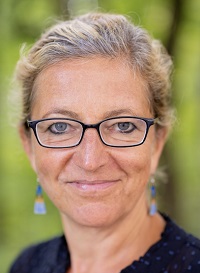
Georgia Institute of Technology (USA)
Abstract title: A study of stochastic and noisy oracles in unconstrained continuous optimization.
-
Abstract
Classical unconstrained continuous optimization algorithms, such as gradient descent rely on the ability to compute the gradient and the, sometimes, value of the objective at the iterates. Many practical algorithms today relax the requirement of access to the exact derivatives or function values and work with their approximations. We call these inexact computations - zeroth- and first-order oracles. They appear in stochastic optimization, where the true quantities are expectations over a distribution, and thus cannot be computed exactly, but can be approximated by sample averages. Inexact oracles also appear in derivative-free optimization where first order derivatives are approximated using function values. There are many other examples arising from extensions of these settings as well as from using randomization. We will give examples of such oracles, provide classification of different types of inexactness that arise in different settings and show the different effects they have on algorithmic behavior
-
Biography
Katya Scheinberg is a Coca-Cola Foundation Chair and Professor at the H. Milton Stewart School of Industrial and Systems Engineering Georgia Institute of Technology. Prior to joining Georgia Tech she held positions at Cornell and Lehigh Universities and at IBM T.J. Watson Research Center. She attended Moscow University for her undergraduate studies and received her PhD degree from Columbia University.
Katya’s main research areas are related to developing practical algorithms (and their theoretical analysis) for various problems in continuous optimization, such as convex optimization, derivative free optimization, machine learning, quadratic programming, etc.
She is an Informs Fellow, a recipient of the Lagrange Prize from SIAM and MOS, the Farkas Prize from Informs Optimization Society and the Outstanding Simulation Publication award from Informs Simulation Society. Katya is currently the editor-in-chief of Mathematics of Operations Research, and co-editor of Mathematical Programming. She is a Chair-Elect of the Mathematical Optimization Society.
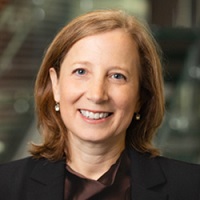
Northwestern University (USA)
Abstract title: Transportation Research for Social Impact in a Changing World
-
Abstract
Humanitarian logistics presents a series of unique and urgent challenges. For example, at the core of disaster response lies the effective and equitable distribution of life-saving supplies to those in need. In such high-stakes environments, operations research holds significant potential to support decision-making—helping relief organizations save lives and resources while upholding principles of fairness, humanitarianism, and transparency. In this talk, we focus on humanitarian operations in a range of settings.
This talk will present opportunities and challenges related to transportation research that strives for positive social impact in a constantly changing world. In such settings, the objectives are often more difficult to quantify since issues such as equity and sustainability must be considered, yet efficient operations are still crucial. The talk will be both a look back over several decades of influential research and a look forward at the challenges ahead, focusing on key papers that span a range of related topics. We will explore how new platform technology is changing both the practice and study of humanitarian logistics. The talk will include open challenges for junior researchers to consider in their own work.
-
Biography
Dr. Karen Smilowitz is the James N. and Margie M. Krebs Professor in Industrial Engineering and Management Science at Northwestern University, with a joint appointment in the Operations group at the Kellogg School of Management.
Dr. Smilowitz is an expert in modeling and solution approaches for logistics and transportation systems in both commercial and nonprofit applications. She has been instrumental in promoting the use of operations research within the humanitarian and nonprofit sectors through the Woodrow Wilson International Center for Scholars, the American Association for the Advancement of Science, and the National Academy of Engineering, as well as various media outlets.
Dr. Smilowitz is the Editor-in-Chief of Transportation Science and a Fellow of the INFORMS society.